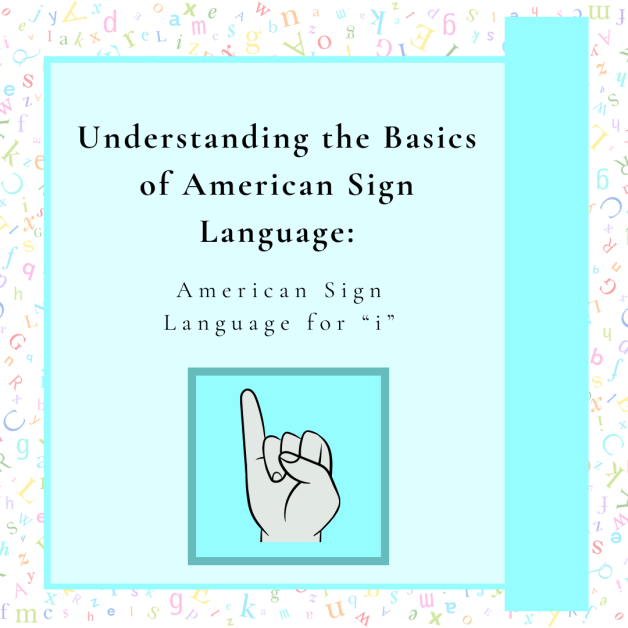
Understanding the Basics of American Sign Language:
American Sign Language for “i”
American Sign Language (ASL) is a rich and dynamic language that uses hand shapes, facial expressions, and body movements to communicate. It is the primary language of many Deaf individuals in the United States and parts of Canada. Whether you want to learn ASL to connect with friends or family members, or simply to broaden your language skills, building a strong foundation is an important first step. Learning ASL not only expands your knowledge but also helps you form meaningful connections with the Deaf and Hard of Hearing community.
ASL is not simply English expressed through hand signs; it is a complete, natural language with its own distinct grammar and structure. Rather than relying on speech and hearing, ASL functions through a visual-manual system. It uses coordinated hand movements, facial expressions, and body language to communicate detailed ideas and emotions. Recognizing its visual nature is essential, as effective communication in ASL depends on spatial awareness and nonverbal signals.
ASL holds immense importance within the Deaf community, serving as a vital tool for communication and a significant cultural pillar. It offers individuals a sense of identity and belonging, reinforcing community ties and shared experiences. Beyond its functional role, ASL is a symbol of cultural pride and resilience. Learning ASL not only equips you with a new language but also opens doors to engaging meaningfully with Deaf and Hard of Hearing individuals, promoting inclusivity and fostering mutual understanding. Embracing ASL can also challenge preconceived notions about communication and accessibility, encouraging a more inclusive society.
Getting Started with ASL
Embarking on the journey to learn ASL can be both fun and immensely rewarding. Here are some foundational steps to guide you as you begin this linguistic adventure:
Learn the ASL Alphabet
The ASL alphabet is the cornerstone of the language, consisting of 26 hand signs that correspond to each letter of the English alphabet. Mastering these letters is a critical first step, enabling you to finger-spell words and names. This foundational knowledge enhances your ability to communicate even when specific signs escape you. Additionally, understanding the alphabet is crucial for advancing to more complex aspects of the language, laying the groundwork for learning signs, phrases, and eventually, full conversations.

Learning the Alphabet is just the beginning
Learning the alphabet in ASL—also known as fingerspelling—is an important first step, but it is only the beginning of truly learning the language. The ASL alphabet allows you to spell out names, places, and words that don’t have established signs. It helps build handshape accuracy, coordination, and familiarity with signing in a visual way. For beginners, mastering the alphabet builds confidence and strengthens foundational skills.
As learners progress, they move beyond spelling individual words and begin using full signs, classifiers, spatial referencing, and role shifting to express ideas clearly and naturally. Understanding Deaf culture is also a key part of becoming fluent, as language and culture are deeply connected.
Basic Signs and Phrases
Once you’ve become comfortable with the ASL alphabet, the next step is to learn basic signs and phrases that are commonly used in everyday interactions. Some foundational signs include:
- Hello: Raise your hand and wave near your forehead.
- Thank You: Touch the fingertips of one hand to your chin and extend your hand outward.
- Yes: Form a fist and nod it up and down.
- No: Close your fingers and thumb together, then separate them like an opening mouth.
These basic signs are essential for initiating and maintaining simple conversations, providing a basis for further learning. As you become more adept, you can gradually expand your vocabulary and engage in more complex dialogues.
Practice Regularly
Consistent practice is the key to mastering any new language, and ASL is no exception. Practicing in front of a mirror can help you refine your expressions and gestures, while collaborating with a friend or partner who is also learning can make the process more engaging. Additionally, utilizing videos or mobile apps can offer visual demonstrations, allowing you to observe the fluidity and nuances of the signs. Regular practice not only solidifies your learning but also builds your confidence in using ASL in real-world situations.
Resources for Learning ASL
There is a wealth of resources available to support your ASL learning journey, ranging from online courses to community-based classes.
Online Platforms
Websites like StartASL.com provide extensive video dictionaries and structured lessons that are accessible for free. These platforms offer a wealth of information, from beginner to advanced levels, making them invaluable resources for independent study. Additionally, YouTube hosts numerous ASL tutorials, offering an opportunity to see signs demonstrated in real-time by native signers, which is crucial for understanding the fluidity and context of ASL.
Local Classes and Workshops
Check with local community centers or colleges to see if they offer ASL classes. These in-person classes provide a structured learning environment and the opportunity to interact with other learners, which can be incredibly beneficial. Participating in workshops and community events focused on ASL not only enhances your language skills but also offers insight into the cultural aspects of the Deaf community. Engaging in such settings fosters a supportive learning atmosphere where you can practice your skills and gain confidence in your abilities.
The Cultural Aspect of ASL
Understanding the cultural context surrounding ASL is as vital as learning the signs themselves. ASL is intrinsically linked to Deaf culture, which emphasizes shared experiences, community support, and a unique set of values and norms.
Deaf Culture
Deaf culture is rich with its own distinct history, traditions, and social norms that have been shaped by collective experiences and challenges. As you learn ASL, it’s important to appreciate and respect the cultural significance of facial expressions and body language, which are integral components of ASL communication. Recognizing the importance of these elements enriches your understanding of the language and helps you communicate more effectively and respectfully within the Deaf community.
Interacting with the Deaf Community
Engaging with the Deaf community provides invaluable opportunities to practice your ASL skills and deepen your understanding of Deaf culture. Attending local Deaf events or social gatherings allows you to immerse yourself in the community, fostering meaningful connections and exchanges. It’s essential to approach these interactions with respect, openness, and a willingness to learn, as this demonstrates your commitment to understanding and appreciating the culture. Such experiences not only enhance your language proficiency but also offer insights into the rich tapestry of Deaf life and communication.
Benefits of Learning ASL
Learning ASL offers numerous benefits that extend beyond basic communication:
- Cognitive Benefits: Acquiring a new language can enhance memory, problem-solving skills, and cognitive flexibility, contributing to overall mental acuity and resilience.
- Career Opportunities: Proficiency in ASL can open doors to a wide range of professions, including education, social work, healthcare, and interpretation, where the ability to communicate with Deaf individuals is highly valued.
- Inclusive Communication: Knowing ASL enables you to engage effectively with Deaf and Hard of Hearing individuals, promoting inclusivity and bridging communication gaps in various social and professional contexts.
Conclusion
American Sign Language is a beautiful and expressive language that provides a gateway to the rich culture of the Deaf community. By learning ASL, you not only gain a valuable skill but also create opportunities for connection and understanding across diverse communities. Whether your motivation is personal enrichment or professional development, the journey into ASL promises to be both rewarding and enlightening. Embark on your ASL learning journey today and explore the vibrant world of sign language, where each sign tells a story and every conversation builds bridges of understanding.